Please view the original post on Samable
 |
| Photo from 2018/2019 |
"New year, new me". A sentence said by many, sometimes repeatedly throughout their lives, and now it is my turn. Or my year. 2024 is forecasted to bring many exciting adventures, changes, and hopefully improvements for me and my family, but before we get into that, I think I should start with where I've been.
Last year was a year of getting established and getting grounded. After the years of COVID, 2023 felt like the year of starting over or returning to pre-pandemic days. We went to several of our friends' weddings, went to baby showers, and started to experience life again. Roy started working again and quickly excelled while I returned to my true passion for fitness and recreation. New lifestyle changes, new apartments, new cars, and most importantly new adventures all to read about. The most exciting part about last year was our travels to Saudi Arabia.
Of course, if you'd rather skip the reading and see the picture timeline, you can see it on my Instagram, or you can see a quick highlight video on my TikTok.
Let's start at the beginning; a month-by-month play-by if you will. At the beginning of the year, Roy started personal training again and is still currently in the process of building up his online presence. Readers, if you have some time we would both appreciate it if you could give his platforms some love: | Website | Instagram | TikTok | Youtube | He also does some training at a local gym and continues to enjoy training and building up his social media.
In the early spring, we took a weekend trip to the coast to attend the wedding of one of my friends. We took the opportunity to spend some time at one of our favorite towns, Lincoln City, and searched the shoreline for glass balls. Unfortunately, we didn't find any glass, but the weather was good and we made a fun road trip out of it. The wedding took place in Newport, so we also got to spend some time seeing the attractions of Newport.
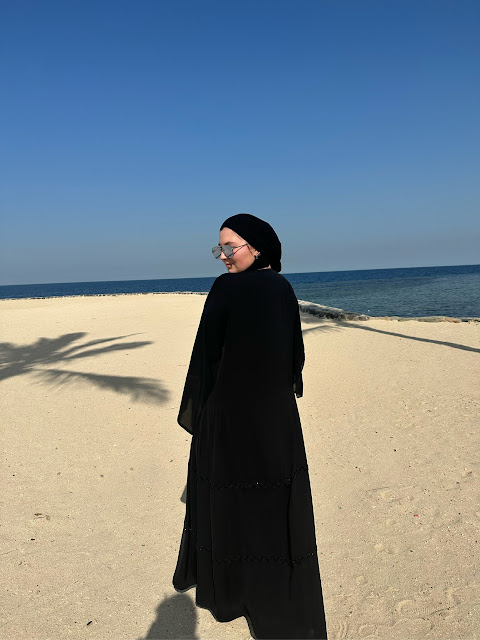 |
| Red Sea |
We traveled during the month of Ramadan and while Roy had informed me that the day would be quiet, I was surprised by how different observing Ramadan was in a truly Muslim country. Like many, we spent our days inside, resting and fasting, then explored the city at night after Iftar. However, I did drag Rowaid out of the house for a few days to go take Instagram pictures with me. Especially in Old Town Jeddah, Al-Balad. The beautiful architecture and experience of Arabian culture at night were busy, with people enjoying games, food, and re-enactments of life and other various Ramadan activities, but during the day, while everyone was fasting the streets were empty. Same with the beach. In the photo, I am along the beach at the Jeddah Corniche, a waterfront park with sculptures and events. Typically it is very busy, with lots of people enjoying everything to offer, but the first few days we were there during the month of Ramadan it was quiet and setting up for a festival.
For Eid, we traveled to spend time with Roy's family. I got to see other parts of Saudi Arabia and visit Roy's childhood memories. Other places we visited while in Saudi, included KAEC -King Abdullah Economic City and Thuwal. While in KAEC we visited more of Roy's family, swam in the sea, and explored the city. In Thuwal we went to the fish market. We got to select our fish, and after they cooked it to our liking we got to enjoy a traditional Saudi sea dish. The fish market was probably my favorite part of the trip. Not only is seafood a favorite of mine, but it was a great experience of the culture and a great bonding moment with Roy's family.
 |
| Eid |
The coast trip is one I hope to repeat again in the future, maybe in the opposite direction, but it gave us a good starting point for exploring our state. We started in Florence and spent two days between Florence and Reidsport, meeting a family friend and playing in the sand dunes before driving up to our favorite town, Lincoln City. We spent the days there relaxing and sitting on the beach before continuing up to Seaside. We went during the Hood-to-Coast race, so we enjoyed the various vendors and new attractions put up but left for Astoria before the crowds came in.
The final stretch of the year was filled with busy work schedules, a move to a newer, bigger apartment, and time to prepare for the new year. Now that it's 2024 there have been some big changes, the first being that I'll be starting a new job at the end of the month. We also have some big plans lined up, and if you haven't already guessed, my New Year's resolution is to get back to Samable and keep you all updated/entertained. Let me know what you want to read more of this year!


